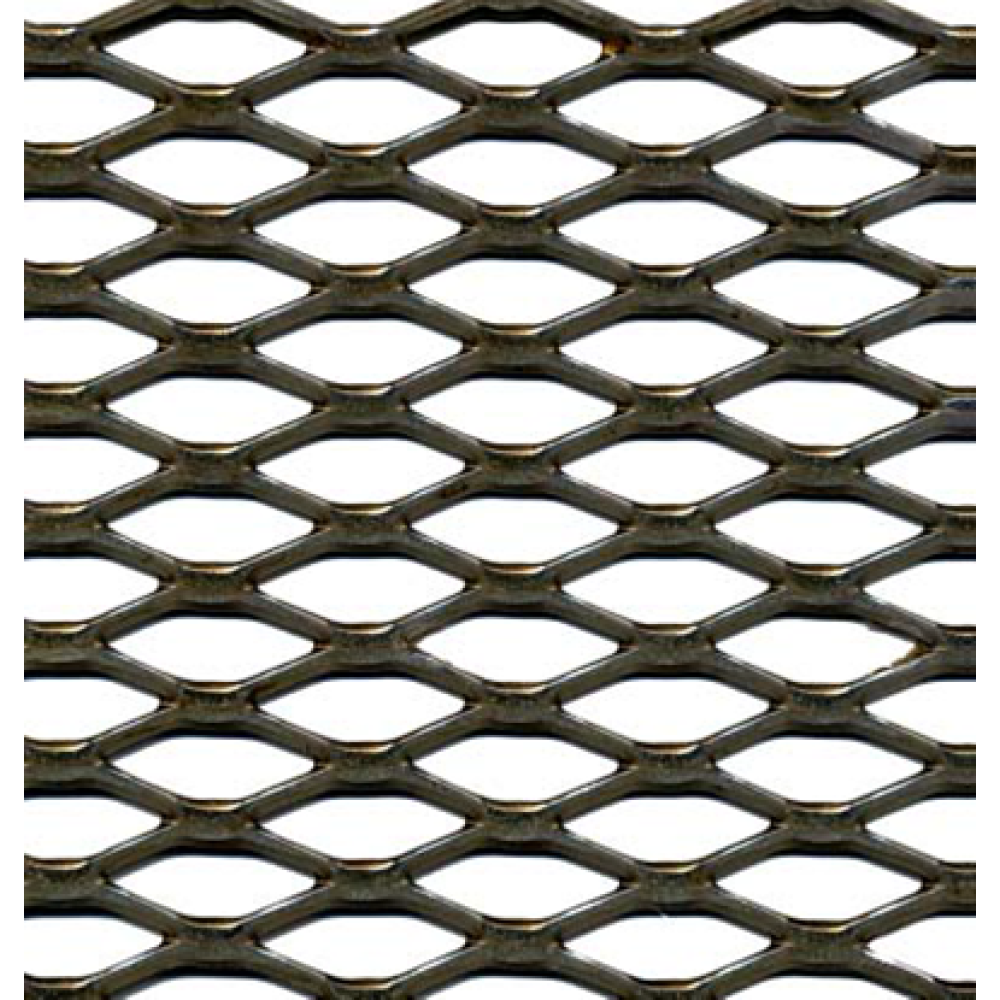
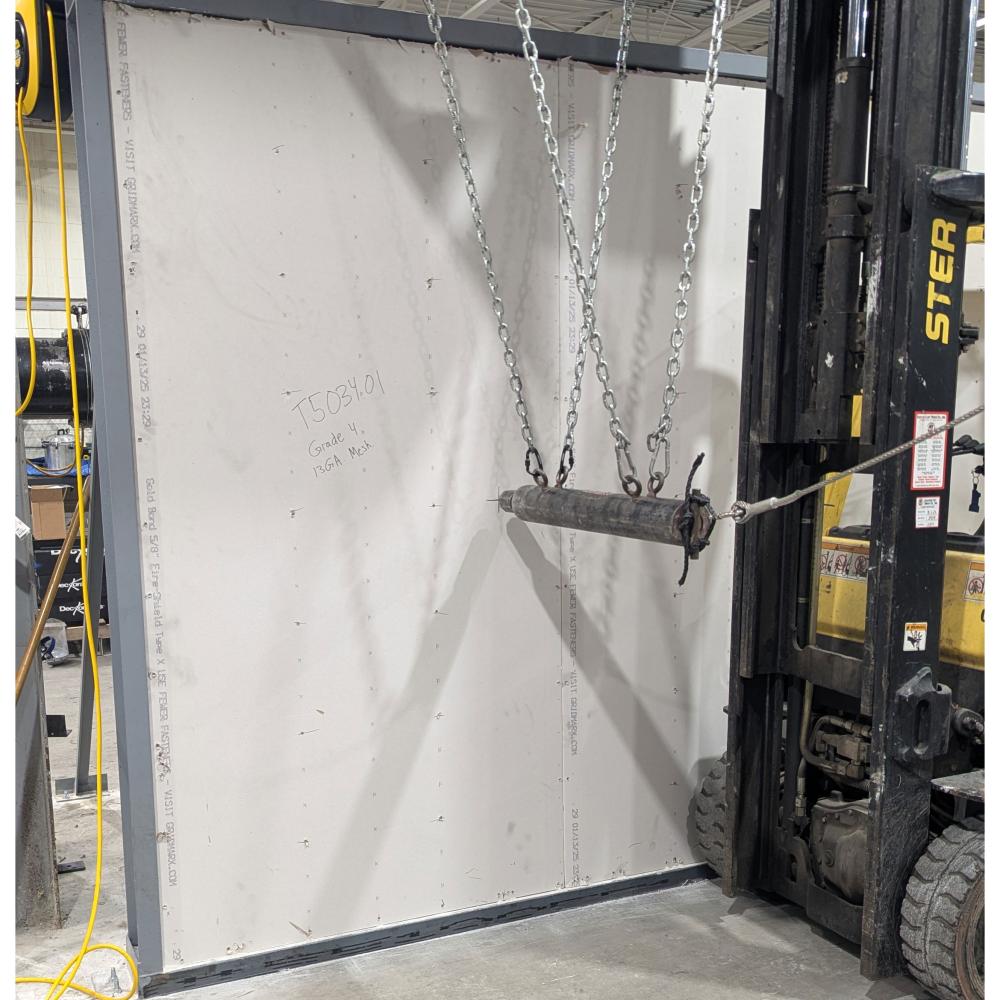
Modified Barrier Mesh™ has been 3rd Party Tested in a Cold formed steel Framed Assembly
Tested to ASTM F2322 - Test Method for Physical Assault on Vertical Fixed Barriers. The framed assembly back up behind the Mesh contributes to the Impact Resistance of the Vertical Walls.
Product Data:
Material: Type II, Class 1 - Carbon Steel - Mesh, complying with ASTM A1011 & ASTM F1267 (mesh modified to reinforce walls)
Standard Sheet Size: 48” x 96”
| Product Code | Nom. Gauge | Overall Thickness | Modified Diamond | Bond Size (SWDxLWD) | Weight lbs/100ft² | Percent of Open Area | Impact Grade (#/cycles) |
|---|---|---|---|---|---|---|---|
| BM50-9-Impact | 9 | .110" | 1/2" | .500" x 1.26" | 306 | 32 | #3 / 200 |
| BM50-13-Impact | 13 | .078" | 1/2" | .500" x 1.26" | 216 | 32 | #4 /100 |
Impact Test Procedure
Under ASTM F2322, wall specimens are constructed as complete assemblies (8-ft tall x 16-ft wide) and mounted in a controlled test frame. The assemblies are then subjected to repeated impact loading intended to simulate aggressive physical assault. A key aspect of the evaluation is that the testing agency may reposition the impactor to challenge joints, edges, fastener lines, framing locations, penetrations, and other potential weak points. This means the test evaluates the real-world performance of the entire wall system, not simply the isolated strength of one component. A wall failure (i.e., breach) is determined when the impact creates an opening that allows passage of the defined test object (5”x 8”x 8” box) with no more than 10 lb. ft of force.
Importance of the Steel Framing System
The performance of an ASTM F2322 wall assembly depends on far more than the mesh alone. The steel stud framing system is a critical structural element because it supports the mesh, transfers impact loads, resists deformation, and maintains attachment integrity under repeated assault. If the framing is undersized, improperly spaced, or inadequately detailed, the assembly can fail at the studs, clips, connections, or attachment points even when the mesh itself remains intact. Because the impactor can be moved across the wall surface to locate vulnerable areas, weaknesses in framing layout and connection detailing can quickly become the controlling mode of failure. The bottom line is clear: the steel stud framing system must be engineered as part of the complete wall assembly and validated through documented third-party testing with published results.
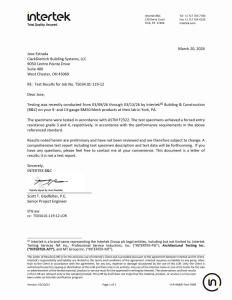
ClarkDietrich Barrier Mesh Results – ASTM F2322 – Impact Resistance for Correctional Facilities. Performed at Intertek Testing Laboratory, York, PA - March 9-13th, 2026 (full results available upon request).
Click here for installation instructions
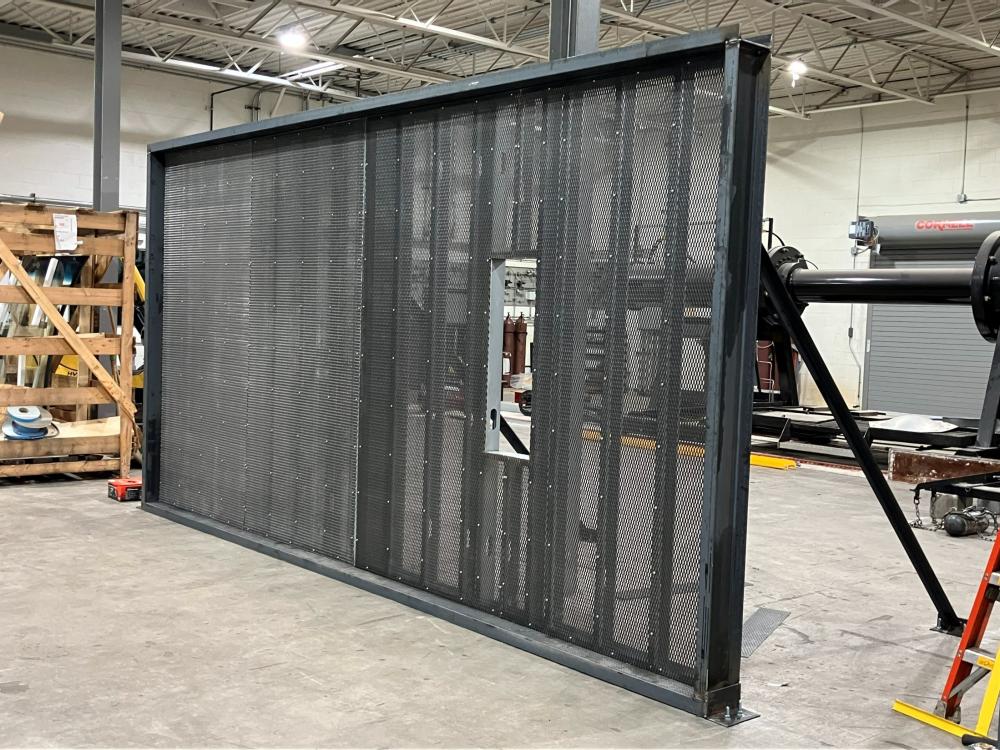
This image is the front of the Test Frame @ Intertek Labs
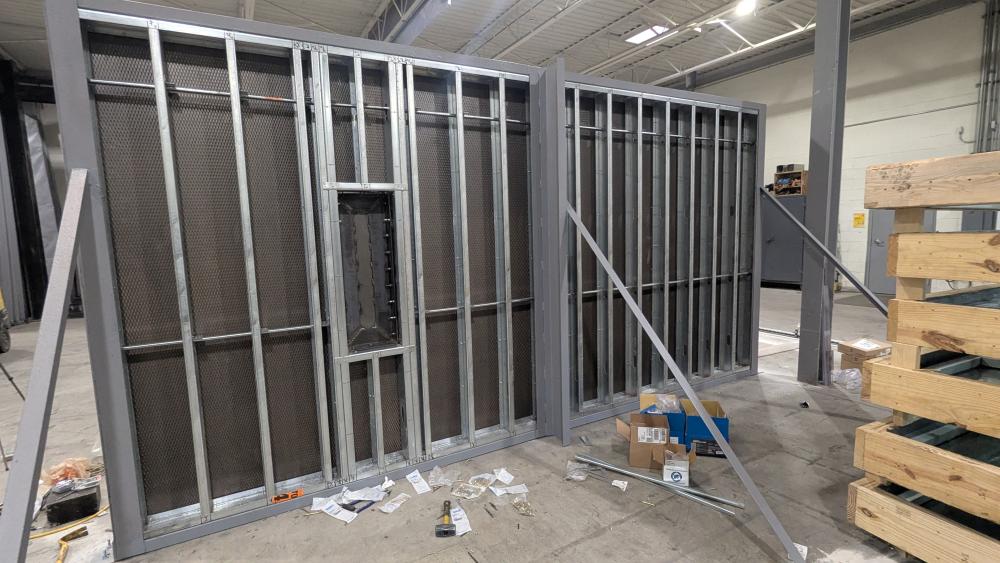
This is the back of the Test frame at Intertek Labs.
Installation
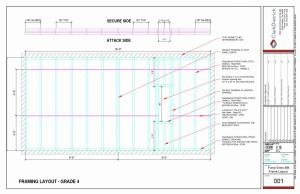
Grade 4 = 100 Impacts on the following System
- Steel Framing: 54 mil (16 ga) 6 in deep, 1 5/8 in flange
- Fasteners: Steel-to-steel screw with a low-profile head, as to not interfere with the installation of the mesh.
- Stud Spacing: 16 in o.c.
- Top/Bottom Tracks: 54 mil (16 ga) 6 in deep 1-5/8 in flange
- Lateral Bracing: Cold Rolled Channel (CRC) – 54 mils (16 ga) 1-½ wide with ½ in legs, spaced at 48 o.c. along the stud punch outs.
- Barrier Mesh Type: BM50-13 GA-IMPACT - fastened with#10-16 x 3/4 in long Philips drive, self-drilling steel screws at every 12 o.c.
Grade 3 = 200 Impacts on the following System
- Steel Framing: 97 mil (12 ga) 6 in deep, 1 5/8 in flange
- Fasteners: Steel-to-steel screw with a low-profile head, as to not interfere with the installation of the mesh.
- Stud spacing: 12 in. o.c.
- Top/Bottom Tracks: 97 mil (12 ga) 6 in deep 1-5/8 in flange
- Lateral Bracing: Cold Rolled Channel (CRC) – 54 mils (16 ga) 1-½ wide with ½ in legs, spaced at 48 o/c along the stud punch outs.
- Barrier Mesh Type: BM50-9 GA- IMPACT- fastened with#10-16 x 1-¼ in long Philips drive, self-drilling steel screws at every 12 o.c.
Refer to the downloadable Barrier Mesh Impact Layouts for common installation layouts
STORAGE
All stored materials shall be kept dry. Materials shall be stacked off the ground, supported on a level platform, and protected from the weather and surface contamination.
Documents
Code Approvals & Performance Standards
- ASTM A1011 Standard Specification for Structural Steel
- ASTM F1267 Standard Specification for Metal, Expanded, Steel
- ASTM F2322 Standard Test Methods for Physical Assault on Vertical Fixed Barriers for Detention and Correctional Facilities
- NAAMM EMMA 557 Standards for Expanded Metal
- SDS Barrier Mesh Carbon Steel Mesh
Storage:
All stored materials shall be kept dry. Materials shall be stacked off the ground, supported on a level platform, and protected from the weather and surface contamination.
PRoduct submittal SHeets
Click the below Product Code to view Submittal/Tech Datasheet.
| Product Code | Description |
|---|---|
| BM50-9-I and BM50-13-I | Barrier Mesh for Impact |
ClarkDietrich SubmittalPro®
Submittal sheets for the exact product you're looking for can be created by using ClarkDietrich's SubmittalPro® Product Submittal System.
- Contact ClarkDietrich Technical Services at 888-437-3244 for any questions about creating product submittals or using SubmittalPro.